
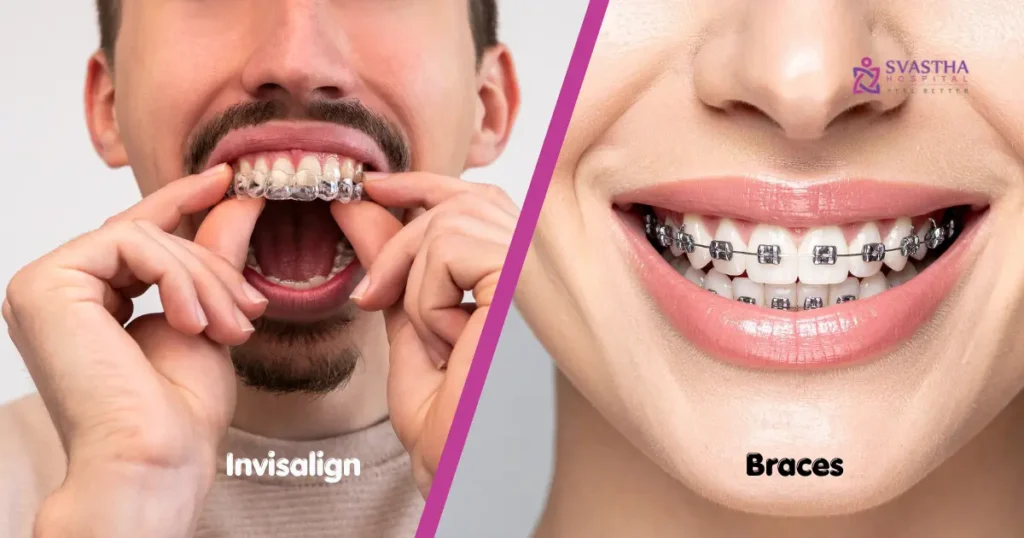
Invisalign vs Braces: Which Is Better for You?
Choosing between Invisalign vs braces is one of the most common questions people ask when they want straighter teeth. Some patients want a treatment that is less visible. Others want the option that may work better for more complex tooth movement. Both can improve your smile, but they work in different ways.
As a dentist, I always tell patients that the best choice depends on your teeth, your habits, your age, and your daily routine. The Invisalign vs braces decision is not only about looks. It is also about comfort, treatment time, maintenance, and how well you can follow the instructions.
In this blog, I will explain Invisalign vs braces in simple language so you can understand the difference clearly before you decide.
What Are Braces?
Braces are a traditional teeth straightening treatment. They use small brackets attached to the teeth and wires that slowly move the teeth into better positions.
Braces can be made of metal or ceramic. Metal braces are the most common and usually the most visible. Ceramic braces are less noticeable, but they still work in a similar way.
Many people choose braces because they can treat a wide range of orthodontic problems. When patients ask about Invisalign vs braces, braces are often recommended for more complex cases.
What Is Invisalign?
Invisalign is a clear aligner system. It uses a series of transparent trays that fit over your teeth and gently move them over time.
Each set of aligners is worn for a certain period before moving to the next set. The trays are removable, which means you can take them out while eating, brushing, and flossing.
For many adults and teenagers, Invisalign is attractive because it is less visible than braces. That is a major reason people compare Invisalign vs braces in the first place.
Appearance and Comfort
One of the biggest differences in Invisalign vs braces is appearance.
Invisalign is nearly invisible when worn, so many people feel more confident at work, school, or social events. Braces are more noticeable, especially metal ones. Some patients do not mind this, while others prefer a more discreet option.
Comfort is also different. Invisalign trays are smooth and custom-made, so they may feel more comfortable in the mouth. Braces can sometimes cause irritation because of the brackets and wires. At the same time, Invisalign must be worn consistently to work well, while braces stay on the teeth all day without any effort from you.
How They Work
The way Invisalign vs braces move teeth is also different.
Braces use steady pressure from wires and brackets. The dentist or orthodontist adjusts them during follow-up visits.
Invisalign uses a planned sequence of trays. Each tray moves the teeth a little more until the final position is reached.
Both systems can be effective, but they depend on proper use and regular monitoring. The right choice depends on how much movement your teeth need and how well you can follow the treatment plan.
Eating and Cleaning
Daily life is an important part of the Invisalign vs braces discussion.
With Invisalign, you remove the trays before eating. This means fewer food restrictions. You can eat most foods, but you must remember to remove the aligners first and clean your teeth before putting them back.
With braces, food can get stuck around the brackets and wires. Hard, sticky, or chewy foods may need to be avoided because they can damage the braces.
Cleaning is usually easier with Invisalign because you can brush and floss normally once the trays are out. Braces need extra care and patience during brushing and flossing. Good cleaning is important in both treatments to protect your teeth and gums.
Treatment Time
The length of Invisalign vs braces treatment depends on your case.
Some mild cases may be completed faster with Invisalign. But if teeth need major movement, braces may be more predictable. Treatment time can vary from a few months to a few years.
What matters most is not only the estimated time, but also how well the treatment is followed. Invisalign only works well if the trays are worn for the required number of hours each day. Braces work continuously because they are fixed to the teeth.
Which Treatment Is Better for Complex Cases?
This is one of the most important parts of Invisalign vs braces.
Braces are often better for complex issues like severe crowding, major bite problems, or teeth that need large movements. Invisalign can treat many cases very well, but it may not be the best choice for every difficult case.
That does not mean Invisalign is weak. It means that orthodontic tools have different strengths. A skilled dentist or orthodontist will choose the option that gives the safest and most reliable result.
Cost Differences
Cost is another major factor in Invisalign vs braces.
In many cases, Invisalign may cost more than traditional braces. The exact price depends on the complexity of the treatment, the clinic, the city, and how long the treatment lasts.
Braces may be more affordable for some patients, especially for simple to moderate alignment problems. Invisalign can feel like a higher investment, but many people value its appearance and convenience.
When comparing cost, always ask what is included. Some treatment plans include scans, visits, retainers, and follow-up care, while others may charge separately.
Who May Prefer Invisalign?
Invisalign may be a better fit if you:
- Want a less visible treatment.
- Can wear aligners for the recommended time every day.
- Want fewer food restrictions.
- Prefer easier brushing and flossing.
- Have mild to moderate alignment issues.
Invisalign is often popular with adults and teens who want a more discreet option. Still, it only works well when worn properly.
Who May Prefer Braces?
Braces may be a better fit if you:
- Have complex tooth movement needs.
- Need a treatment that works all day without removing it.
- Do not want to worry about wearing aligners consistently.
- Are treating serious bite problems.
- Want a more traditional orthodontic option.
For some patients, braces are the stronger and simpler choice. They do the work continuously, which can be helpful for people who may forget to wear removable trays.
Final Choice
The real answer to Invisalign vs braces is that neither is best for everyone.
Invisalign is often preferred for its comfort, appearance, and convenience. Braces are often preferred for stronger control and more complex treatment needs. Both can create healthy, straight smiles when planned carefully and monitored by a dental professional.
The best choice is the one that matches your teeth, your routine, and your treatment goals. A proper orthodontic consultation will help you choose wisely.
Frequently Asked Questions
1. Which is faster: Invisalign or braces?
It depends on the case. Mild problems may finish faster with Invisalign, but braces can be better for complex movement.
2. Is Invisalign more comfortable than braces?
Many patients find Invisalign more comfortable because the trays are smooth and removable.
3. Can Invisalign fix crooked teeth?
Yes, Invisalign can fix many crooked teeth, especially mild to moderate cases.
4. Are braces better for teenagers?
Braces can be very effective for teenagers, especially when treatment needs are more complex.
5. Which costs more: Invisalign or braces?
In many cases, Invisalign costs more, but the exact price depends on the treatment plan and clinic.