
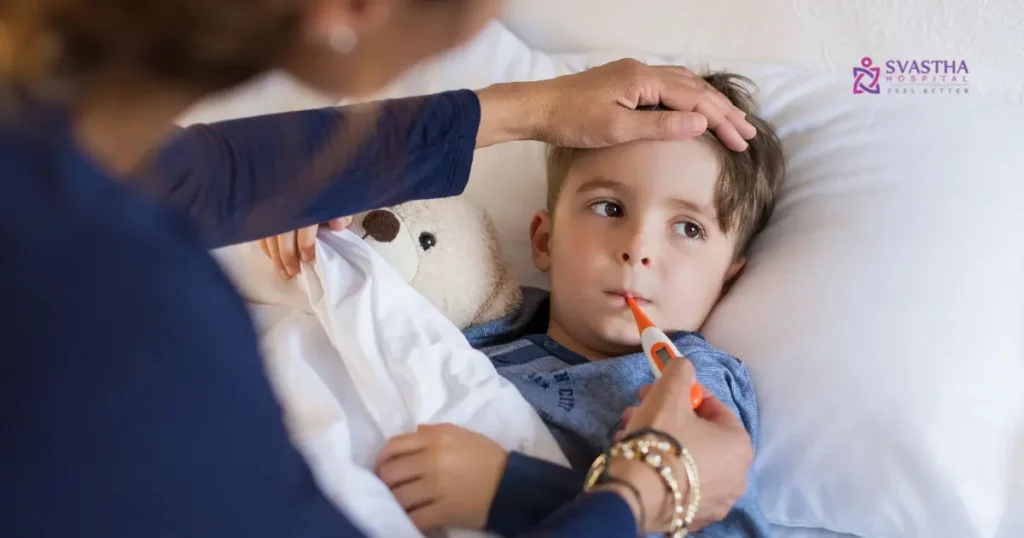
Fever in Children: Causes, Care, and When to Worry
Fever in children is one of the most common reasons parents worry and visit a doctor. A fever is not a disease by itself. It is usually a sign that the body is fighting an infection or reacting to something else. In many cases, fever in children is part of a normal healing process.
Parents often panic when a thermometer shows a high number. That is understandable, but the number alone does not always tell the full story. A child with a mild fever may be playful and drinking well, while another child with a lower fever may look very sick. That is why fever in children should always be understood with the child’s overall condition.
What fever means
Fever in children usually means the body temperature is higher than normal. In most cases, a temperature of 100.4 F or 38 C or above is considered a fever. Fever can happen because of a viral infection, bacterial infection, vaccination, heat exposure, or sometimes no clear cause at all.
A fever helps the body fight germs, so it is not always harmful. The goal is not just to lower the temperature, but to keep the child comfortable and find out why the fever is happening. Understanding fever in children helps parents respond calmly and correctly.
Common causes of fever
The most common cause of fever in children is a viral infection, such as a cold, flu, or stomach infection. These fevers often improve on their own with rest, fluids, and time. Bacterial infections like ear infections, throat infections, and urine infections can also cause fever and may need treatment.
Sometimes fever in children happens after routine vaccines. This is usually mild and short-lived. Fever can also appear when a child is overheated or dressed too warmly, though this is less common. In every case, the child’s behavior, breathing, drinking, and alertness are important clues.
How to care for a child with fever
Fever treatment at home starts with comfort and hydration. Offer water, breast milk, formula, soup, or other age-appropriate fluids often. Let the child rest, but do not force complete bed rest if they want to play calmly. Light clothing and a comfortable room temperature can also help.
Do not use cold water baths or ice baths, because they can make the child feel worse. A lukewarm sponge bath is sometimes used, but it is not necessary for every fever. Medicine may be used if the child is uncomfortable, but the dose should be based on the child’s weight and given as advised by a doctor. Fever in children should be treated with care, not fear.
When medicine is needed
Not every fever needs medicine. If a child is drinking well, playing a little, and not very uncomfortable, medicine may not be needed. Fever treatment at home is mainly about making the child feel better. Medicine is helpful when the child has body aches, poor sleep, irritability, or poor comfort.
Never give aspirin to a child unless a doctor specifically says so. Paracetamol or ibuprofen may be used in the right dose for age and weight, but mixing or overusing medicines can be dangerous. If you are unsure, ask a doctor before giving anything. Safe fever in children care always depends on the right medicine and dose.
Signs that need medical attention
Most fever in children is mild and passes without serious problems. But some signs should never be ignored. Call a doctor urgently if the child has trouble breathing, a seizure, stiff neck, rash with fever, very bad drowsiness, repeated vomiting, or signs of dehydration such as dry mouth or very little urine.
Also seek medical help if a baby younger than 3 months has a fever, even if the child looks okay. Infants can become seriously ill more quickly than older children. A fever lasting more than 3 days, or one that keeps coming back, should also be checked. These warning signs help parents know when fever in children needs closer care.
Fever by age group
Fever in children can mean different things depending on age. In babies under 3 months, even a small fever is important and needs medical review. In toddlers and older children, many fevers are caused by common viral infections and improve in a few days.
School-age children may have fever with cough, sore throat, ear pain, or stomach upset. Teenagers may also have fever from infections, overexertion, or sometimes more serious causes. The child’s age, symptoms, and energy level all matter when deciding what to do next.
Myths parents should ignore
One common myth is that fever itself is dangerous. In most cases, fever in children is the body’s defense and not the real problem. Another myth is that the temperature must return to normal before the child can recover. In truth, a child can improve even while the fever is still present.
Some parents also believe that fever must always be treated quickly with medicine. That is not true. Fever treatment at home should focus on comfort, fluids, and watching for warning signs. Do not panic just because the temperature number looks high. Look at the child as a whole.
Helping your child stay comfortable
A child with fever may want extra cuddles and quiet time. This is completely normal. Keep the child hydrated, avoid heavy blankets, and check on them regularly. Offer simple foods if they are hungry, but do not force food if they do not want it.
If the child is older, explain in simple words that fever means the body is fighting germs. This can reduce fear. Fever in children is easier to manage when parents stay calm and the child feels safe and cared for.
When fever becomes an emergency
There are a few cases where fever in children needs immediate medical help. These include difficulty breathing, confusion, blue lips, severe dehydration, seizure, unresponsive behavior, or a child who looks very ill. A fever with a purple rash or neck stiffness is also serious.
If your child has a chronic illness, weak immunity, or a medical device, the threshold for concern may be lower. In such cases, contact a doctor earlier rather than waiting. The safest approach is to act quickly when the child looks worse than expected.
Final thoughts
Fever in children is common and often not dangerous by itself. The most important thing is to watch the child, not just the temperature. Most children recover well with rest, fluids, comfort, and time. Good fever treatment at home can help a child feel better while the body heals.
If you notice warning signs, do not delay medical care. A calm and informed parent is the child’s best support. Understanding fever in children helps you make smart decisions and avoid unnecessary panic.
Frequently Asked Questions
1. What temperature is considered fever in children?
A temperature of 100.4 F or 38 C and above is usually considered a fever.
2. Should I always give medicine for fever?
No. If the child is comfortable and drinking well, medicine may not be needed.
3. How long can a fever last?
Many viral fevers last 2 to 3 days, but longer fevers should be checked by a doctor.
4. When should I worry about fever in children?
Worry if the child has breathing trouble, seizure, dehydration, rash, or unusual sleepiness.
5. Is fever in children always caused by infection?
No. Fever can also happen after vaccines, heat exposure, or other medical reasons.